
Public Safety · Municipalities · Transit · Social Housing
One worker cannot patrol a transit hub, a library, and a community centre at the same time
LoiterBlock gives public sector teams a continuous, consistent presence in high-risk spaces, so staff can focus on situations that genuinely need a human response, not routine patrols of spaces that could manage themselves.
Spaces that work for everyone
When public spaces feel unsafe or unmanaged, the community loses access to essential services. LoiterBlock responds automatically, so the space stays welcoming and staff are only called when a situation genuinely needs them.
Transit hubs
Shelters, platforms, and station washrooms where loitering creates safety risks for commuters and delays service.
Public libraries
Reading rooms, washrooms, and quiet areas where extended loitering affects access for other patrons.
Community centres
Entrances, change rooms, and multipurpose corridors where staff coverage is limited outside program hours.
Social housing
Shared lobbies, stairwells, and laundry facilities in social and subsidized housing where tenant safety is paramount.
Parks and public washrooms
Unmonitored outdoor facilities where prolonged loitering creates hygiene and safety issues with no staff nearby.
Budget and procurement
Designed for how public sector actually works
Public procurement has real constraints: annual budgets, approval processes, and accountability requirements. LoiterBlock is built to fit within them, not around them.
A predictable annual cost, documented activity logs, and fast deployment mean you can deploy, report on results, and renew without the overhead of a traditional security technology project.
Fixed annual cost per device
No per-incident fees, no monitoring contracts with annual escalators, and no surprise invoices. LoiterBlock fits into a standard capital or operational budget line.
Audit logs for funding and reporting
Every deterrence event is timestamped and logged. Use the data to support grant applications, funding renewals, safety committee reporting, and council presentations.
No long procurement cycles
LoiterBlock deploys without IT infrastructure changes, network upgrades, or lengthy integration projects. From approval to operational in days, not quarters.
Scales without adding headcount
Each additional location adds a device, not a staff line. Whether you are managing one transit hub or a network of community facilities, the cost model stays predictable.
Privacy-first by design
Public accountability matters. LoiterBlock's detection is radar-based, with no reliance on cameras, facial recognition, or video analytics, meaning no biometric data is captured or shared. An optional still-image verification camera is available for dashboard confirmation of deterrence events, but it is never used for detection and no video is recorded. Built to align with municipal privacy obligations and public trust.
A faster path to the right response
When someone is in distress in a public space, whether experiencing a mental health crisis, a medical emergency, or a drug overdose, the difference between a good outcome and a bad one is often time.
LoiterBlock alerts staff the moment someone has been in a space longer than expected. That's an early signal, before a situation becomes a crisis. Staff can reach that person sooner, and connect them with social services, wellness workers, or emergency responders as needed.
It's not about moving people out. It's about making sure no one is left unnoticed.
Alerts go out before situations escalate, giving your team more time to respond with care, not in a high-tension moment.
A faster notification means faster referral, to outreach workers, social services, or emergency care, depending on what someone needs.
Prolonged inactivity in unsupervised areas like washrooms or stairwells can flag a potential medical emergency, prompting a wellness check before it becomes critical.
Frontline worker safety
Your staff should not have to be the first line of deterrence
Frontline workers at transit stations, community centres, and social housing facilities are regularly expected to approach and redirect people who are loitering. This creates real exposure: verbal abuse, threats, and physical confrontations are not rare. Workers compensation claims and staff turnover follow.
LoiterBlock intervenes automatically, calmly, and consistently, before the situation reaches a point where a staff member has to step in. When a human response is needed, your team arrives informed, not reacting cold to an unknown situation.
Fewer confrontations
Automated deterrence resolves most situations before staff need to be involved.
Informed response
When staff do respond, they have event context, not just a vague complaint to act on.
Duty of care support
Documented deterrence activity demonstrates that reasonable steps were taken, supporting your obligations to staff and the public.
Smarter use of your team's time
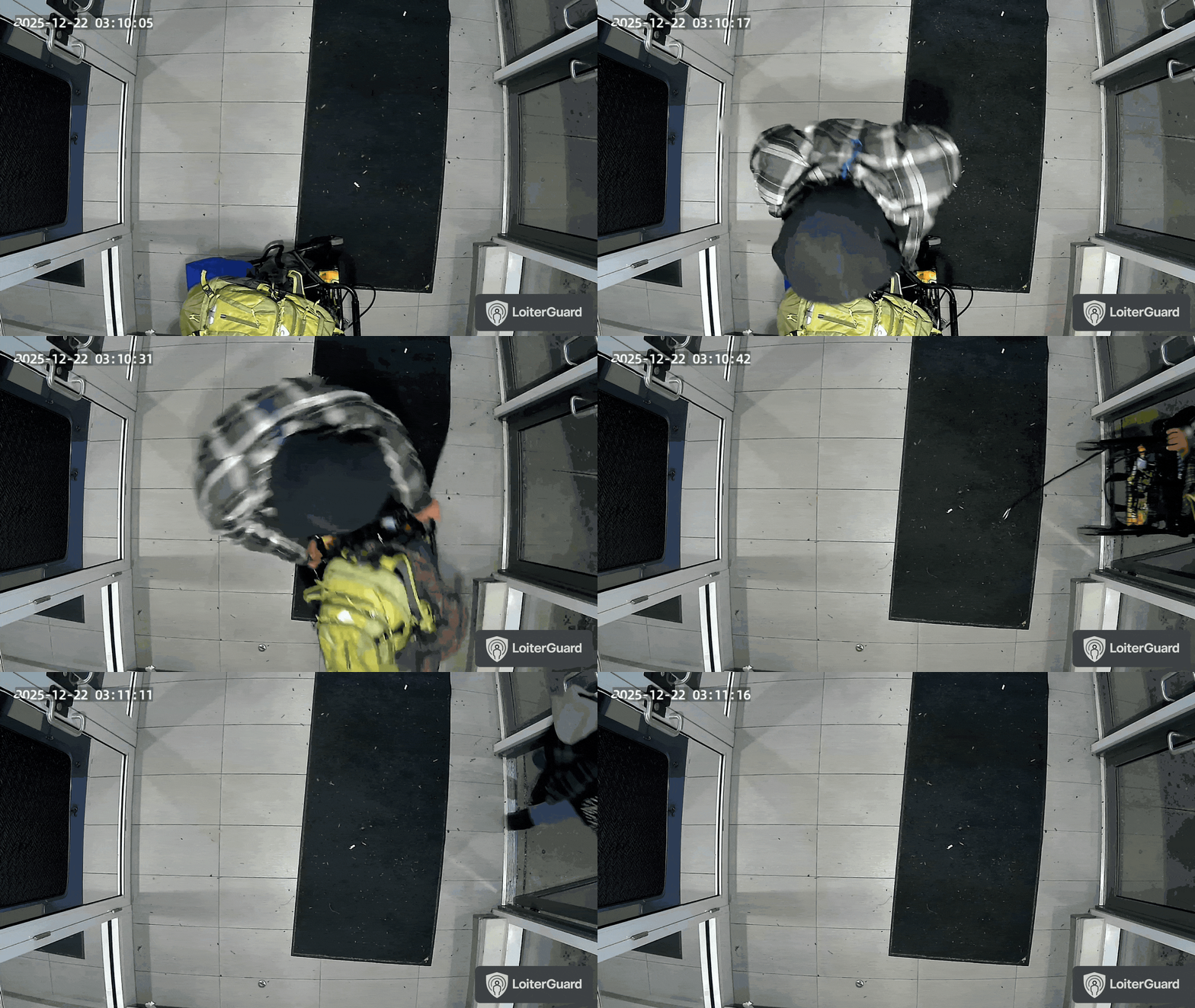
Your staff can't be everywhere. LoiterBlock acts as a continuous, consistent presence, monitoring spaces and alerting your team only when a response is needed. Less time reacting to routine situations. More capacity for the moments that matter.
Fewer unnecessary dispatches
Staff are notified only when deterrence does not resolve the situation, not for every person passing through. Alerts carry context, not just noise.
Audit-ready activity logs
Every event is timestamped and logged, giving you a clear record to support staffing decisions, funding requests, and reporting to oversight bodies.
Predictable operating cost
Fixed annual cost per device. No per-incident fees, no overtime, no surprise invoices. Budget-friendly for annual procurement cycles.
Built for cities that care about getting it right
We are actively working with municipalities and public sector operators across Ontario. If you are exploring how technology can support public safety without adding surveillance infrastructure, we would like to talk.