
KW property managers are already adopting smart building technology. LoiterBlock is the piece that solves the problem no app, camera, or guard schedule has been able to crack: the vestibule at 2am, the stairwell your tenants avoid, the shared space that's becoming someone else's overnight address.
650K+
Waterloo Region residents, fastest growing region in Ontario
100K+
Post-secondary students in the region
24/7
Autonomous coverage at a fraction of a standard guard contract
Kitchener-Waterloo is growing faster than almost anywhere else in Ontario. The ION LRT has anchored a wave of mid-rise and high-rise residential development along King Street, with new towers in Uptown Waterloo, the Innovation District, and Kitchener's downtown core adding thousands of units to a market that was already under pressure. That density is largely positive, more people, more economic activity, more vibrancy in corridors that needed it. But density in shared buildings brings shared-space problems, and the LRT corridor is no exception.
The specific challenge in KW is layered. Student rental properties near the University of Waterloo and Wilfrid Laurier, some of the highest-turnover housing stock in Ontario, have vestibule and common-area issues that repeat with every new tenant cohort. Meanwhile, the newer condo towers along the ION route are discovering that modern architecture doesn't automatically produce safe shared spaces. Parkades, ground-floor lobbies, and stairwells that weren't designed with overnight occupancy in mind are becoming exactly that, particularly in the colder months when the options for people with nowhere to go become more limited.
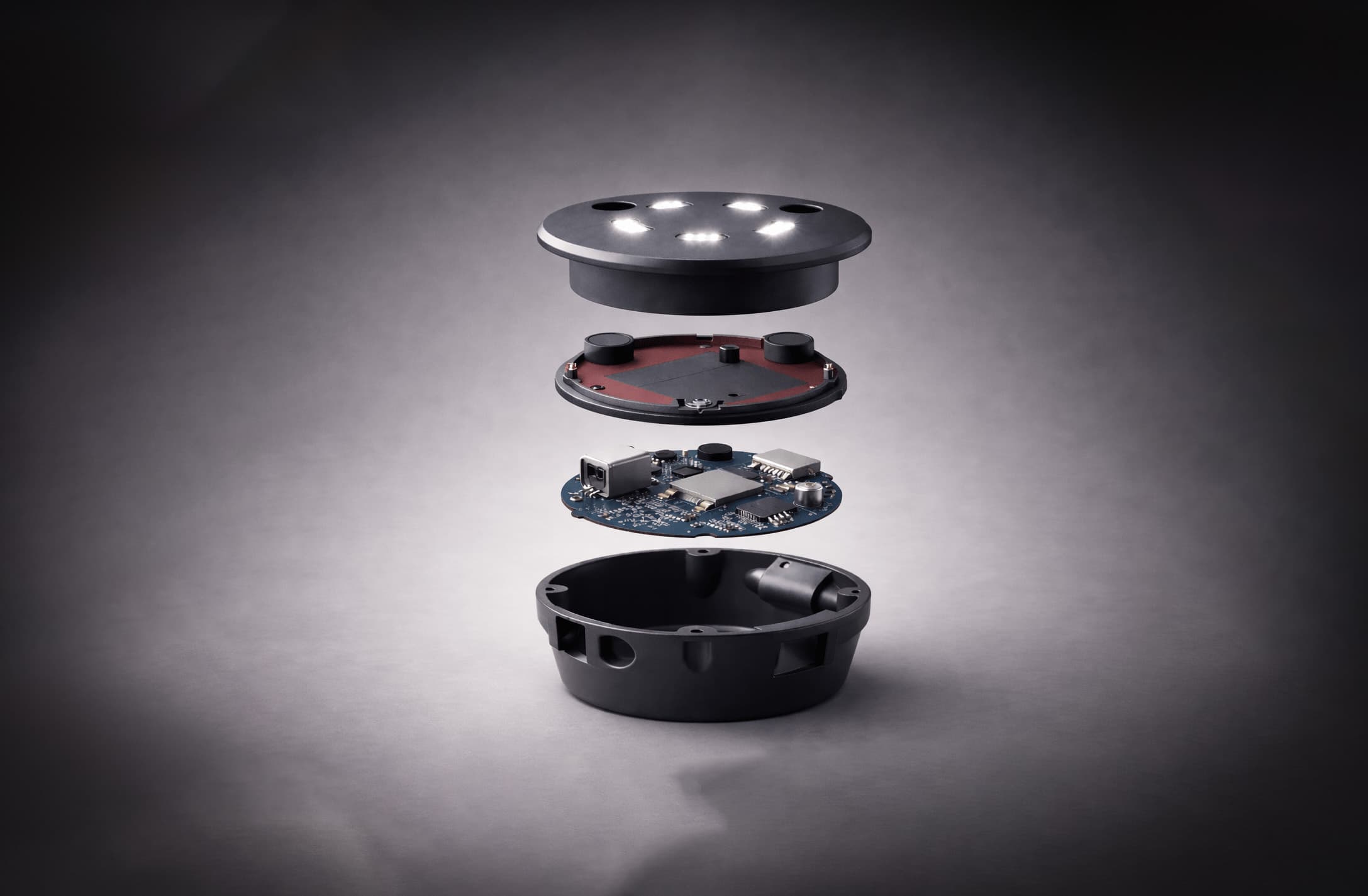
KW property managers are already using smart thermostats, building automation systems, and digital access control. LoiterBlock fits naturally into that stack, a single Cat6 PoE cable, a ceiling-mounted unit that integrates quietly into any building type, and a cloud dashboard that gives you incident data, deterrence rates, and wellness alerts from every device in your portfolio. It doesn't require a system overhaul. It doesn't require a monitoring contract. It just runs, every night, whether you're thinking about it or not.
Data you can actually use.
Every incident logged with timestamp, duration, and resolution. Monthly reports ready for building owners and condo boards. KW property managers are used to having data, LoiterBlock gives you the security data you've been missing.
Built for high-density, high-turnover buildings.
Student rentals, purpose-built rental towers, mixed-use condos. LoiterBlock handles the shared-space challenges that come with density without requiring staff monitoring, guard contracts, or tenant confrontation.
Radar-based detection. No live video. No footage.
In a region with two major universities and a tech sector that thinks seriously about privacy, this matters. No live video feeds. No audio. No facial recognition. No data stored on individuals. The system responds to behaviour, presence and dwell time, and nothing else.
Student housing near the University of Waterloo and Wilfrid Laurier is some of the most demanding residential stock to manage in Ontario. High turnover, dense occupancy, and shared spaces that see around-the-clock use create conditions where vestibule and common-area issues develop fast and persist longer than they should. The specific problem in student housing isn't always the tenants themselves, it's the people they let in, and the people who follow them in, and the people who find a warm lobby or laundry room on a February night and decide to stay. LoiterBlock addresses all of it autonomously, without creating an adversarial atmosphere that affects the actual residents who live there.
The towers rising along King Street between Kitchener and Waterloo represent a new chapter for Waterloo Region's housing stock, modern, amenity-rich, and positioned along one of Ontario's most active transit corridors. They also represent a new set of shared-space management challenges for property managers who may be operating purpose-built rental at scale for the first time. Vestibules, parkade levels, and ground-floor amenity spaces in transit-adjacent buildings attract unauthorized overnight occupancy in ways that suburban properties don't. LoiterBlock gives property managers along the ION corridor a deterrence layer that works around the clock without adding to their operational overhead.
Kitchener's Innovation District and the broader tech campus environment, Communitech, Google, and the ecosystem around them, have created a commercial property landscape where first impressions matter and shared spaces are part of the product. Service corridors, secondary entrances, and parking structures attached to office buildings and mixed-use commercial properties are exposed overnight in ways that a single security guard can't cost-effectively address. LoiterBlock provides autonomous first-line deterrence at secondary entrances and service areas without the cost, scheduling complexity, or liability of a contracted guard presence.
No video. No audio. No data stored on individuals. Just presence and dwell time, and a space that stays clear.
The Region of Waterloo's population is projected to reach 1 million by 2051, driven by immigration, post-secondary growth, and continued tech sector expansion. That growth is mostly good news for property managers, strong rental demand, low vacancy, and a tenant base with income. But it also means more density, more shared infrastructure, and more shared-space management challenges arriving faster than most operating budgets can absorb.
The specific pressure point right now is the gap between building design and building reality. New towers along the ION corridor were designed for a certain kind of tenant and a certain kind of use. The actual experience, particularly in vestibules, parkades, and ground-floor spaces during overnight hours, is more complicated. People who need shelter in a city where shelter is increasingly scarce will find it in the warmest, most accessible space available. In a dense urban corridor, that's often a building vestibule.
LoiterBlock doesn't solve the underlying housing shortage. Nothing a property manager buys will. What it does is give your building a consistent, autonomous first response that protects your tenants, reduces your operational burden, and creates a clear, documented record of what's happening in your shared spaces, every night, whether you're monitoring it or not.
LoiterBlock's hardware and installation is a one-time cost per entrance, and the monthly subscription is a fraction of what most buildings spend on nightly patrol. For a building running two nightly guard checks, dropping to one check and adding LoiterBlock for continuous coverage typically recovers the hardware cost within a few months and saves money every month from there. For a property without a guard contract at all, it buys 24/7 autonomous coverage in the spaces your current solution doesn't reach.
Book a 20-minute demo with our team. We'll show you exactly how the device works, walk through your specific buildings, and give you honest pricing. If it's not the right fit, we'll tell you that too.
Serving Kitchener, Waterloo, Cambridge, and surrounding Waterloo Region municipalities. Units available 6-8 weeks from order confirmation.